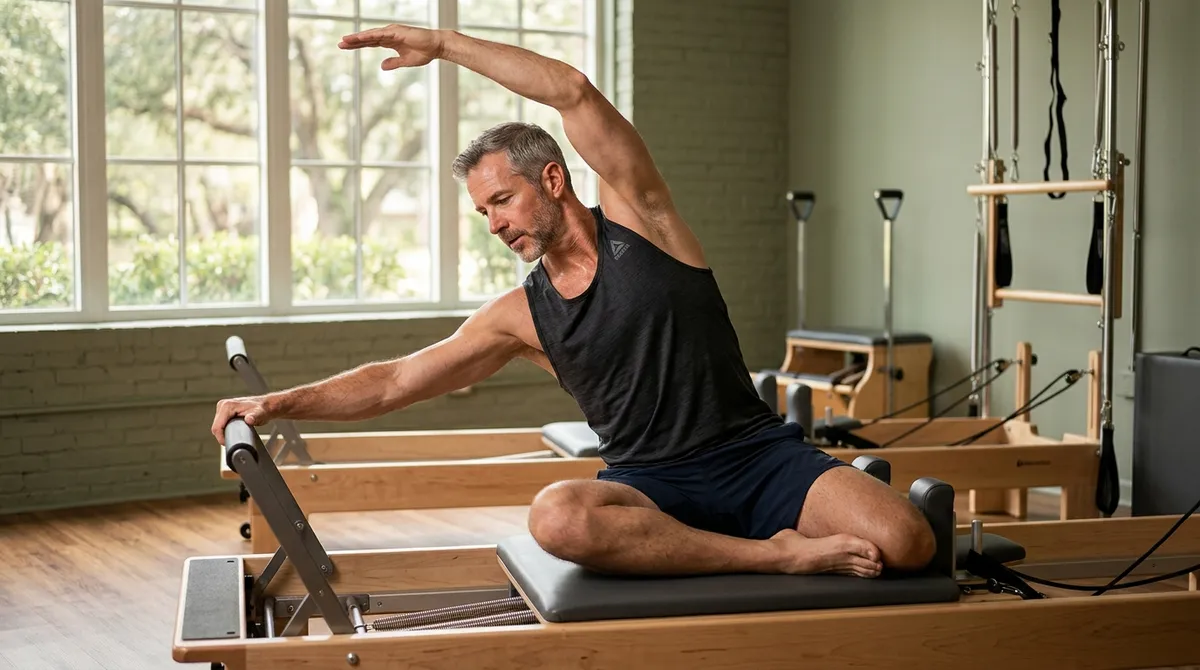
Pilates has become increasingly popular in recent years, especially among men over 40 seeking low-impact exercises to enhance their strength and stability. One movement has been highlighted by experienced instructors for its effectiveness: the coordination with lateral reach exercise. This reformer-based movement not only targets the core but also stabilizes the shoulders—two critical areas for maintaining functionality and preventing injuries as you age. Here’s how you can perform this simple yet transformative exercise.
Understanding the Coordination with Lateral Reach
The coordination with lateral reach is designed to build both core strength and shoulder stabilization. As you age, having a strong core and stable shoulders is paramount for daily activities and athletic pursuits alike. This exercise integrates movement and balance to encourage coordination, helping to keep you agile and active.
Benefits of the Exercise
- Core Strengthening: This move activates the core muscles, which are essential for maintaining good posture and support your spine.
- Shoulder Stability: A strong core supports shoulder mechanics, reducing the risk of injuries.
- Low Impact: Suitable for those with joint concerns, this exercise promotes fitness without high impact.
- Functional Movement: By mimicking everyday motions, this exercise improves your overall body mechanics, making simple tasks easier.
How to Perform the Coordination with Lateral Reach
Step-by-Step Instructions
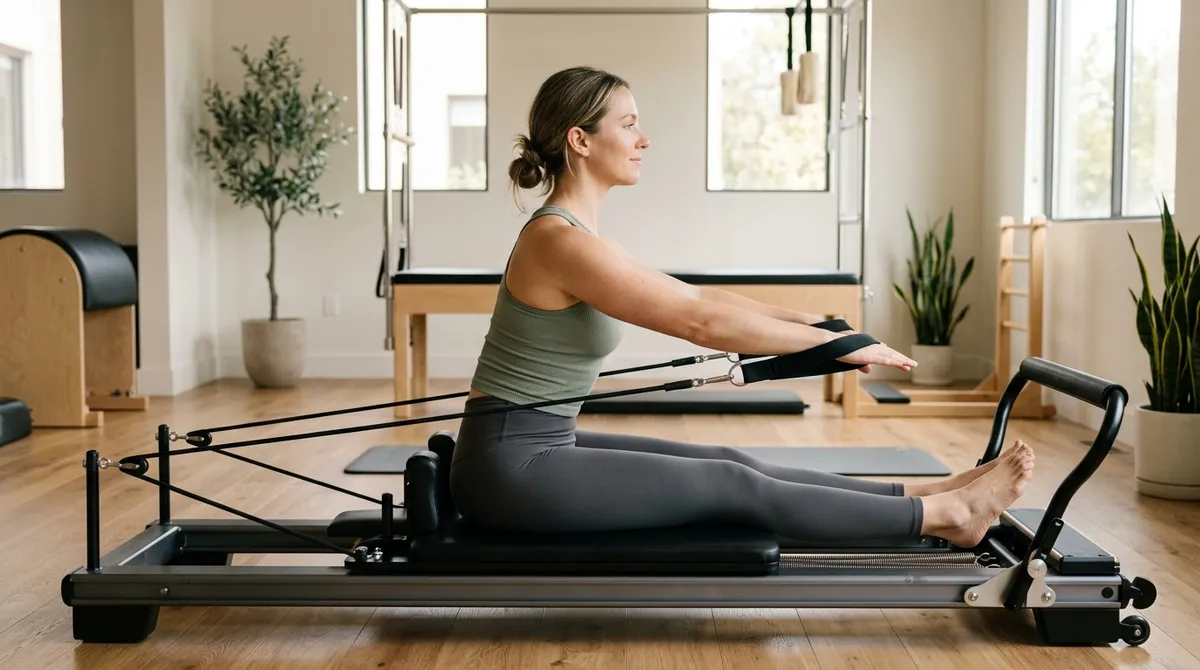
- Equipment Setup: Use a Pilates reformer. Adjust the springs to a medium resistance setting that feels manageable yet challenging.
- Starting Position: Lie down on your back with your head on the headrest and feet in the straps. Your knees should be bent at about 90 degrees, feet flexed.
- Engagement: Begin by engaging your core. Imagine pulling your belly button toward your spine to stabilize your trunk.
- Lateral Reach: From the starting position, extend one leg out to a straight position while simultaneously reaching the opposite arm overhead, creating a diagonal line from your foot to your hand. Keep your core engaged without twisting your torso.
- Return to Start: Bring your leg and arm back to the starting position in a controlled manner. Repeat on the other side, alternating movements.
- Repetitions: Start with 5-10 repetitions on each side, focusing on quality of movement rather than quantity.
Modifications for Different Fitness Levels
- Beginner: If you’re new to Pilates, you can modify the range of motion by only extending your leg and arm partway while keeping the movements small and controlled.
- Intermediate to Advanced: Increase the challenge by extending both arm and leg fully and adding a stability ball beneath your hands for extra resistance and balance training.
Common Mistakes to Avoid
- Overextension: Don't overstretch your back or neck when reaching; maintain a neutral spine.
- Twisting the Torso: Ensure that your body remains stable and engaged through your core throughout the exercise.
- Holding Breath: Remember to breathe deeply and steadily as you perform the movement to enhance oxygen flow, aiding in muscle endurance.
Incorporate This Exercise Into Your Routine
Consider adding the coordination with lateral reach into your weekly routine 2-3 times a week to reap the benefits of core strength and shoulder stability. It’s an excellent choice for anyone looking to maintain their physical health as they get older without the wear and tear that come with high-impact workouts.
Final Takeaway
Each movement you make contributes to your long-term mobility and wellness. By dedicating time to this simple yet powerful Pilates exercise, you not only strengthen your core and shoulders but also invest in a healthier, more active future. Make this a staple in your fitness regimen, and watch how it transforms your strength and stability!