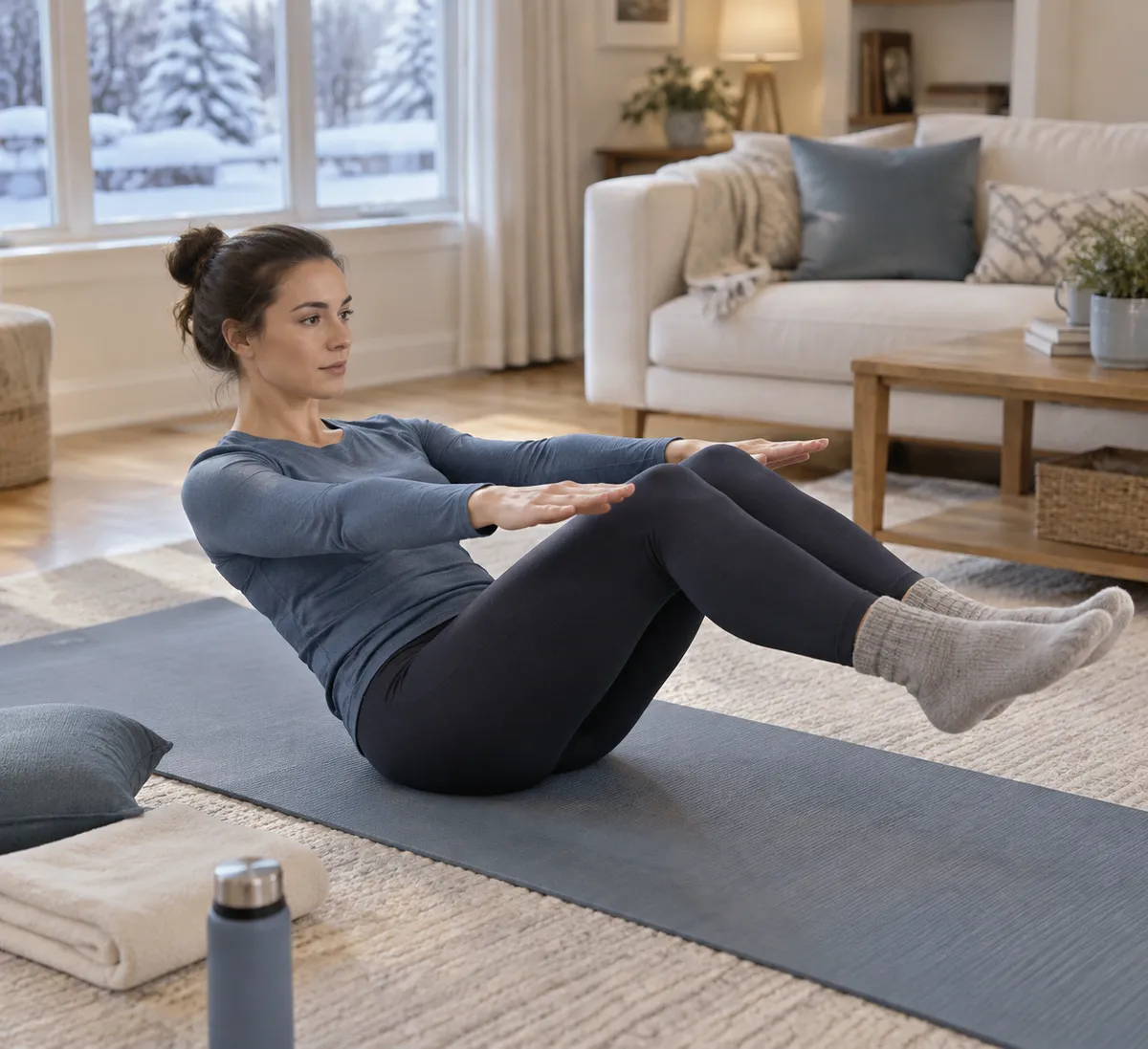
When the weather turns and workouts move indoors, you don't need a gym full of equipment or a high-impact class to train your core. You need a plan that is simple, low-impact, and easy to repeat. This guide shows you how to build that kind of routine, and how to choose a Pilates class that fits it.
The idea comes from a recent Fitness Friday segment on CBS News Chicago, where Michael Samuels of JETSET Pilates demonstrated core-strengthening Pilates moves and spotlighted the studio's approach to low-impact fitness. I only have the broad outline of that segment, not a move-by-move breakdown, so I won't pretend to reproduce his routine. What follows is general guidance in the same spirit, and my own framing, not his instructions.
Why Pilates Fits Colder Months
Colder weather pushes more people indoors, per the segment's framing, and that makes quick, accessible core work especially useful. Pilates suits that moment for a few practical reasons:
- It's low-impact. No jumping or pounding, so it's easier on joints.
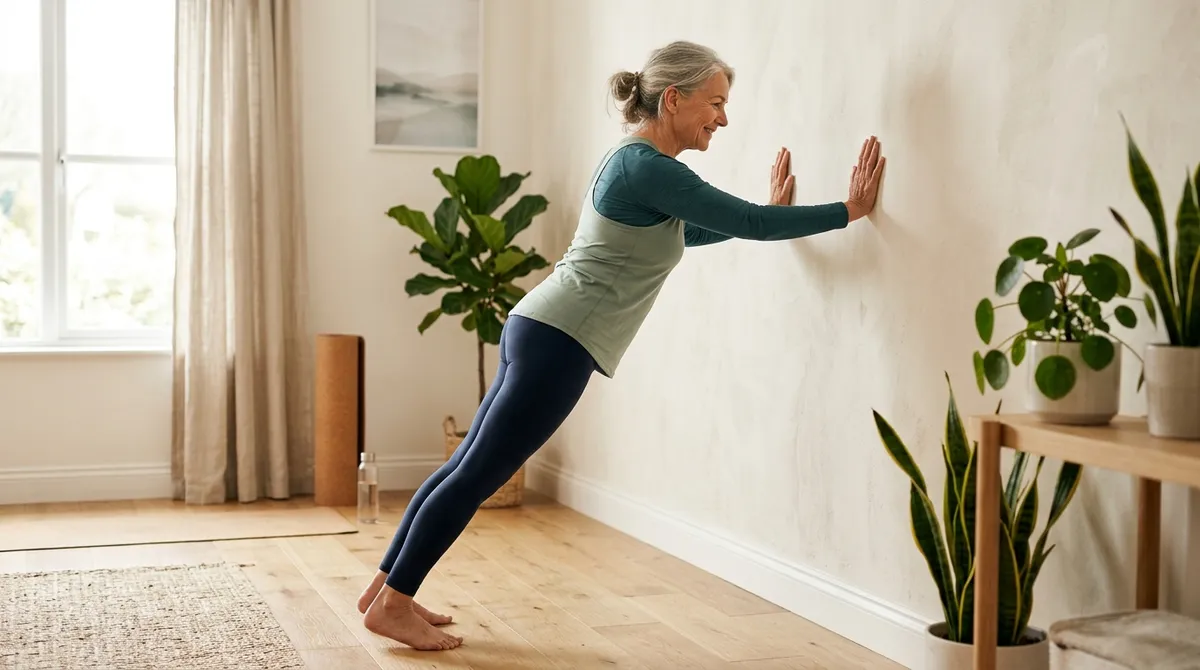
- It needs little space. A mat-sized patch of floor is enough for most core work.
- It's scalable. You can keep a move small as a beginner and make it harder as you get stronger.
Set Up a Short Core Session
Consistency beats length. A short session you actually do will serve you better than an ambitious one you skip. Try this structure as a starting point:
- Pick a spot. Clear a mat-sized area and wear something you can move in comfortably.
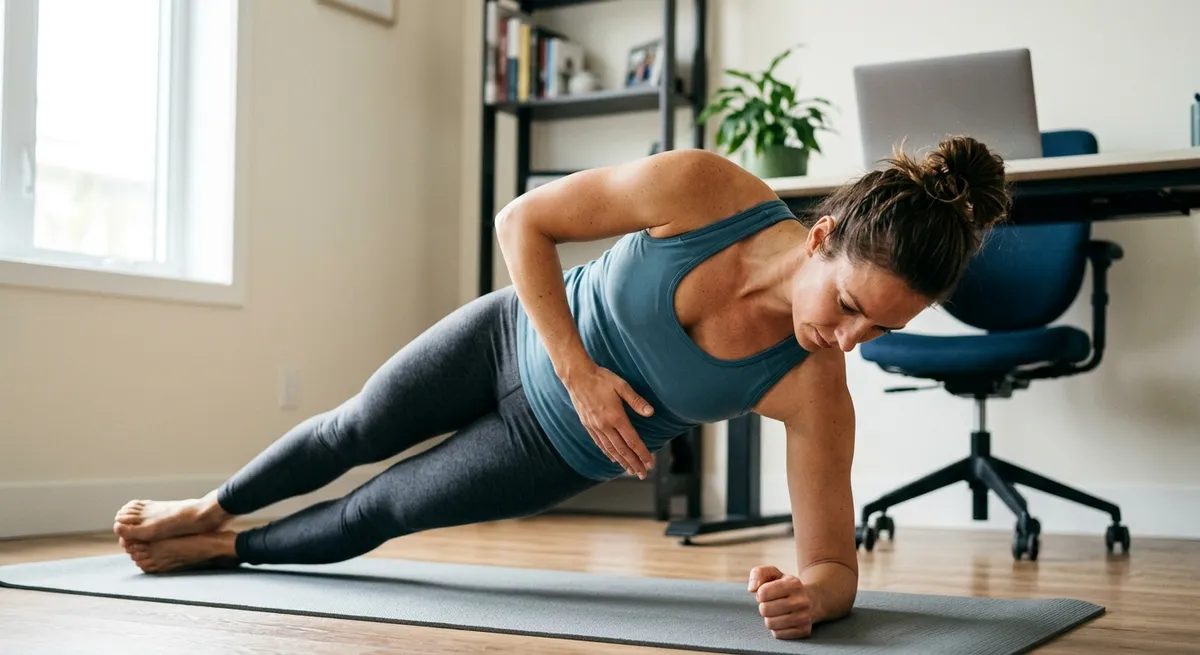
- Choose three to five core moves. Stick with beginner-friendly versions. Classic Pilates mat work such as the hundred, single-leg stretch, and dead bug-style leg lowers are common starting points, though these are my suggestions rather than moves confirmed from the segment.
- Work slowly. Controlled movement is the point. If you're rushing, you're probably leaning on momentum instead of your core.
- Keep it to about five minutes on busy days, and extend it when you have time.
Form Cues That Make Beginner Moves Count
Core training works when you feel it in the right place. A few general cues help:
Breathe on purpose
Exhale through the hardest part of a move and inhale as you reset. Holding your breath tends to make your neck and shoulders do the work.
Keep your movements smaller than you think
A small, controlled range with steady abdominal engagement beats a big, sloppy one. Reduce the range if your lower back starts to take over.
Stop before form breaks
When you can no longer keep control, stop or modify. Muscle fatigue is fine; pain is a signal to back off. If you have a back issue, injury, or are pregnant, check with a healthcare provider before starting a new routine.
What to Expect in a Studio Class
If you'd rather learn in person, a studio class gives you something a video can't: someone watching your form. I can't describe JETSET Pilates' specific class format beyond its low-impact focus, so ask any studio you're considering these questions:
- Is there a beginner or intro class?
- How large are the classes, and does the instructor offer individual corrections?
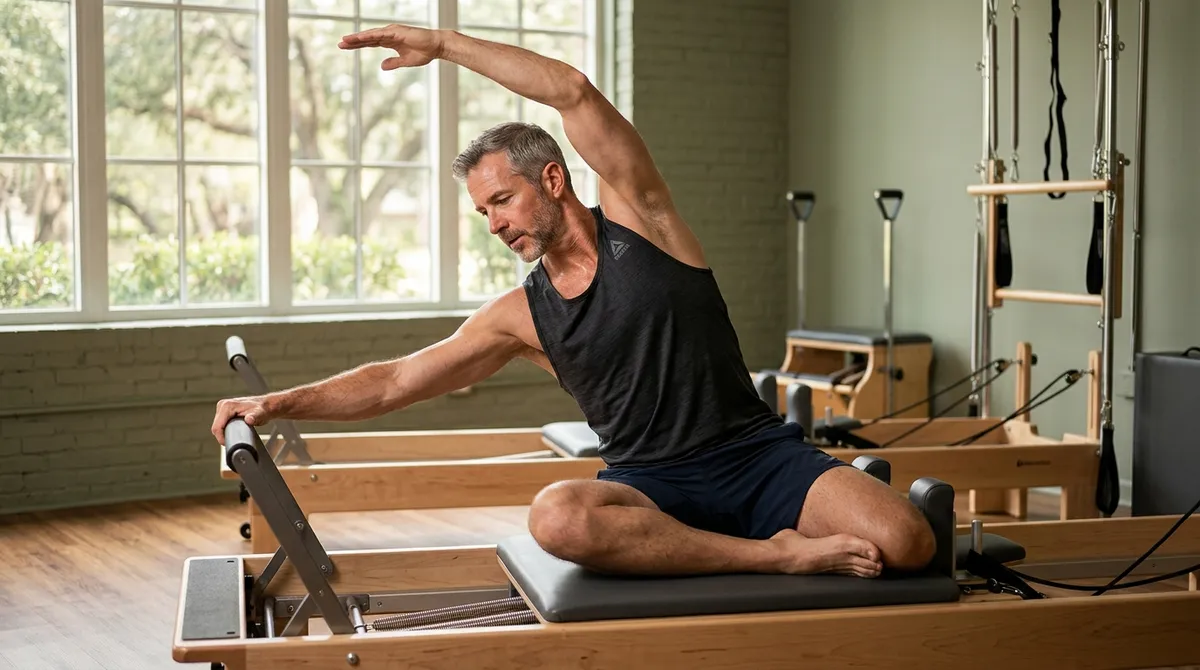
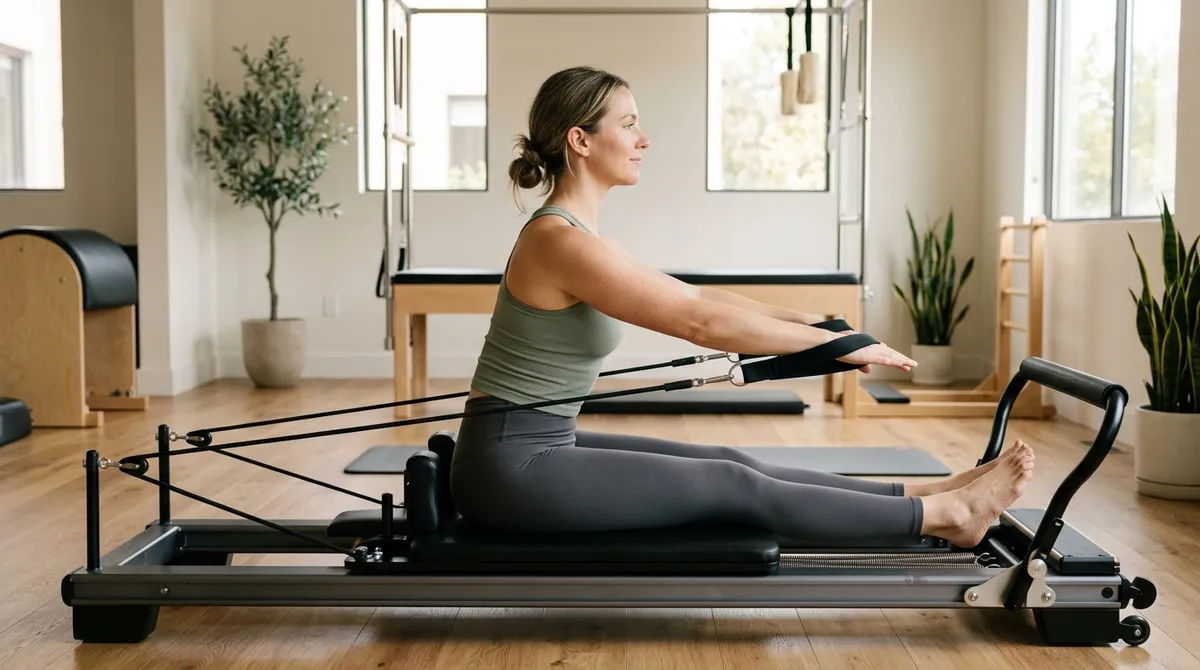
- Is the class mat-based, equipment-based, or both?
- Can you modify moves for injuries or limited experience?
Going in with those answers makes it much easier to choose a class you'll stick with.
Pair Pilates With the Rest of Your Routine
Core work plays well with other healthy habits. A few minutes of Pilates can follow a walk, warm you up before yoga, or act as a mindful reset in the middle of a workday. Because the pace is slow and focused, it also doubles as a moment of mindfulness, which is a welcome break when schedules fill up.
Your Next Step
Tomorrow, set a five-minute timer, pick three beginner core moves, and do them slowly with steady breathing. Repeat on a few days this week. Once that feels easy, book an intro class to get a trained eye on your form.