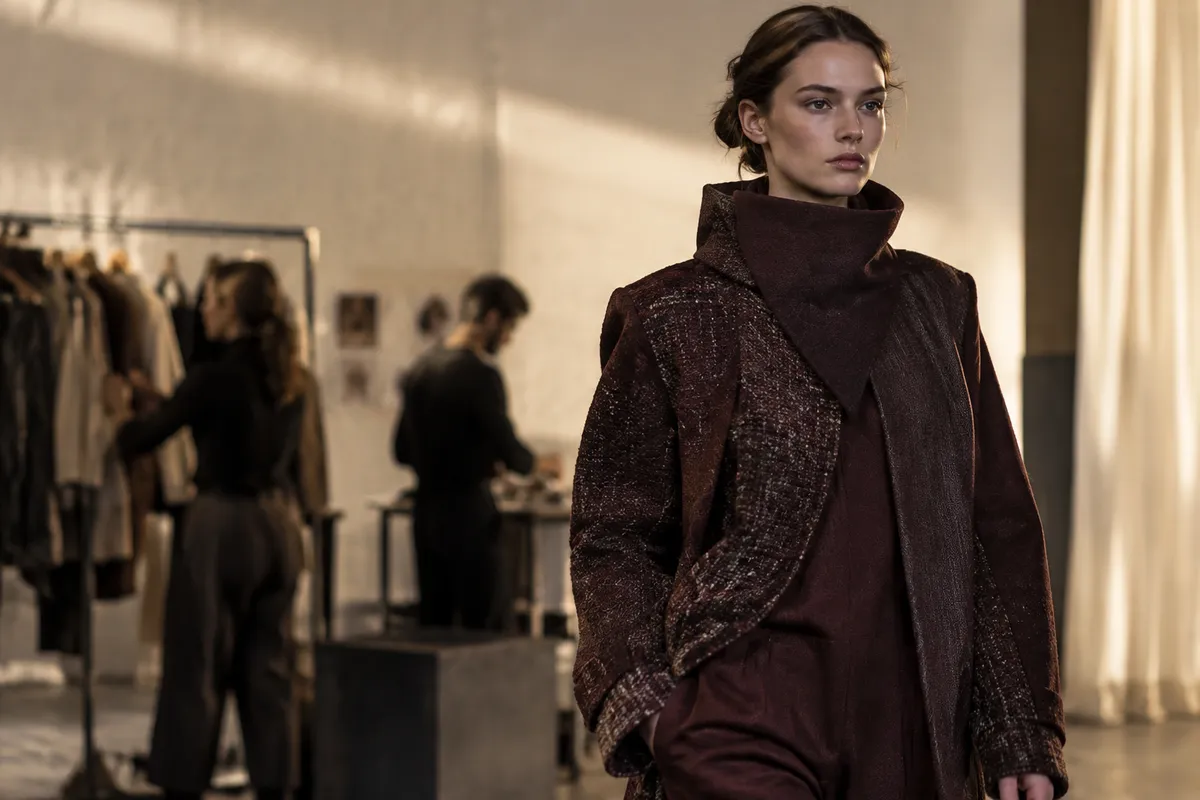
Ireland Fashion Week is back for its second year, and the story is less about glamour than about what a community can build when it backs its own makers. Per the BBC, this year's edition features Coco Rocha, Alana Hadid and more than 80 designers across the island. If you care about where your clothes come from, or about how local creative scenes grow, there is a practical lesson here you can use at home.
By the end of this piece, you'll know what the BBC's coverage says is driving the event, why smaller fashion weeks matter, and how to support emerging designers in your own area.
What's happening in Ireland
The BBC reports that the event's second edition is bigger, with more than 80 designers taking part across the island. The coverage frames it as a breakthrough moment for Irish fashion, helped by heritage materials, emerging talent and growing international attention.
The backdrop is a fashion calendar dominated by London, Paris, Milan and New York. Ireland Fashion Week is positioning the island as a serious creative player alongside them, rather than trying to copy them.
Coco Rocha's full-circle moment
The BBC's headline describes Coco Rocha's appearance as a "full circle moment", and the coverage connects her Irish dancing background to her walking an Irish runway. Whatever your view of celebrity at fashion events, a familiar name does a useful job: it draws cameras and buyers toward designers who might otherwise struggle to get noticed.
That's the real value of a headline guest. The spotlight is borrowed, and the benefit goes to the people behind the clothes.
Why a smaller fashion week matters
The angle worth taking from this story is that a fashion week can be a community builder, not just a showcase. Here is what that looks like in practice.
It gives emerging designers a stage
With 80-plus designers involved, there is room for newcomers as well as established names. The BBC's coverage points to Belfast designers and to Irish materials such as Donegal tweed, Aran wool and linen as part of the story.
It makes local materials part of modern style
Heritage fabrics are being treated as a strength. For you as a shopper, that is a useful lens: a garment's story, from fibre to finish, can be as much a reason to buy as its silhouette.
It builds an ecosystem
The BBC describes a stronger creative ecosystem taking shape: designers, makers, models, press and audiences all in one place. Scenes grow when people meet, share work and see each other succeed.
How to bring this energy to your own neighborhood
You don't need a runway to apply the idea. A few doable steps:
- Find your local makers. Search for independent designers, tailors and knitwear studios near you and follow their work.
- Buy one thing a season from them. One considered piece beats several impulse buys, and it keeps money in your community.
- Show up. Attend pop-ups, markets and trunk shows. Attendance is the cheapest form of support.
- Host a small event. A clothes swap or a fundraiser showcase for local designers can raise money for a cause, such as a scholarship fund, while giving makers an audience.
- Ask about materials. Makers love to talk about where their wool or linen comes from. Your curiosity tells them it matters.
The healthy-living angle
Buying less and buying better is kind to your budget and your wardrobe. Supporting local creative work also builds the sort of connected community that makes neighborhoods feel good to live in. Style, in that sense, is a form of care.
The takeaway
Ireland Fashion Week shows that you don't have to be one of the Big Four to matter. This week, pick one local designer or maker near you, follow them, and plan to buy or attend something of theirs before the month is out.