Why Side Planks?
As we age, maintaining functional strength becomes crucial. For men over 50, traditional core exercises like crunches can often lead to discomfort and neglect the important aspect of stability. Side planks, a versatile move found in Pilates, prioritize functional core strength, enhance spine support, and improve overall balance. Let's explore how to properly perform side planks, their benefits, and modifications suited for all fitness levels.
Benefits of Side Planks
Side planks outshine traditional core exercises in several ways:
- Functional Strength: Engaging the lateral muscles of the core, side planks promote strength that translates into daily activities, from bending to lifting.
- Posture Support: This exercise encourages good posture by stabilizing the spine, making it easier to sit upright or stand confidently.
- Balance Improvement: By activating stabilizing muscles, side planks enhance your balance, reducing the risk of falls — a significant concern as we age.
- Back Pain Relief: Strengthening the core can relieve pressure on the lower back, providing much-needed comfort for those with back pain.
Getting Started with Side Planks
Basic Form Cues
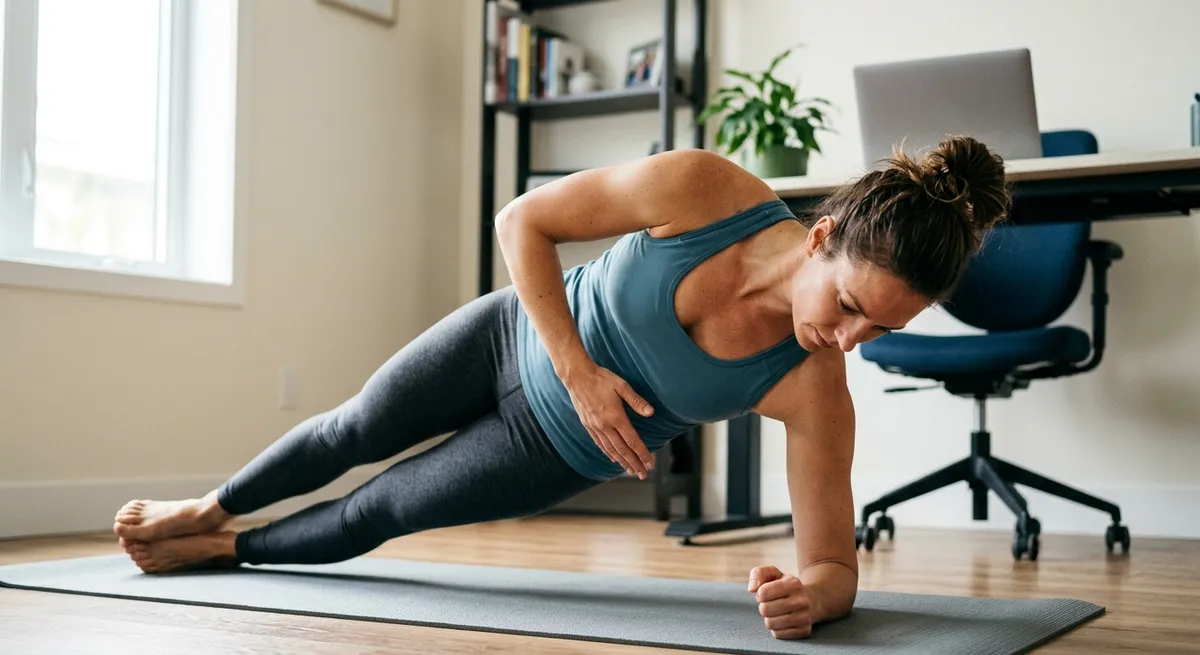
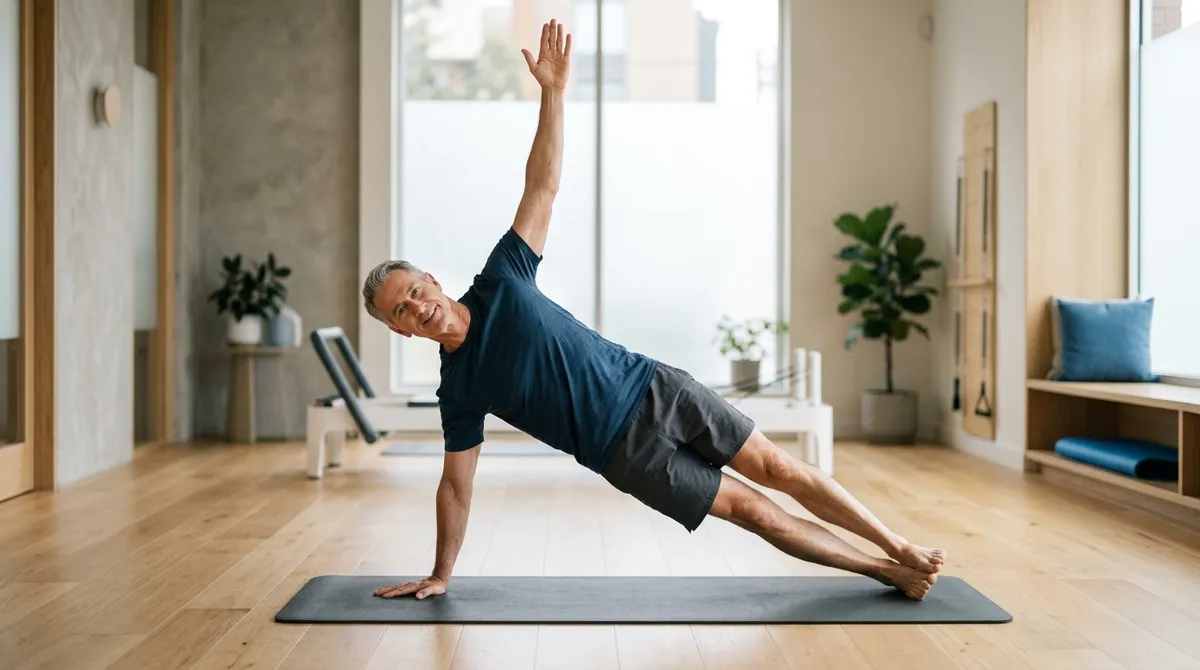
- Positioning: Begin lying on your side with your legs extended and stacked on top of each other.
- Elbow Placement: Position your elbow directly under your shoulder, ensuring a straight line from your head to your feet.
- Lift: Engage your core and lift your hips off the ground, forming a straight line. Hold this position while maintaining good alignment.
- Breathing: Breathe steadily to maintain control.
Modifications for Beginners
If you're new to side planks or feel uncomfortable, consider these easier variations:
- Knee Support: Instead of balancing on your feet, keep your lower knee on the ground for extra support.
- Short Duration: Start by holding the position for 10-15 seconds, gradually increasing your hold time as you gain strength.
Side Plank Progression
As you build strength, you can progress to more challenging variations:
- Leg Raises: Once you're comfortable, raise your top leg while holding the side plank to increase difficulty.
- Dynamic Movement: Try dipping your hips down and lifting back up while in the side plank position to engage even more muscles.
A Simple 4-Week Progression Plan
To help you build strength progressively, here's a straightforward plan:
- Week 1: 3 sets of 10-15 seconds of side planks, using knee support if needed.
- Week 2: 3 sets of 20-30 seconds, still using knee support, working on form and breathing.
- Week 3: 3 sets of 30-45 seconds without knee support, focusing on maintaining alignment.
- Week 4: 3 sets of 45-60 seconds, try adding leg raises or transitions for additional challenge.
Incorporating Side Planks into Your Routine
Aim to integrate side planks into your workout routine 2-3 times a week. Pair them with other functional strength exercises like squats or lunges for a well-rounded approach to body strength and overall health. Combating the effects of aging doesn't just require lifting weights; it involves training your body to move well.
Final Thoughts
Side planks are a lightweight yet powerful exercise for men over 50, offering far more than crunches ever could. They not only enhance core strength but also promote better movement patterns for everyday tasks. Embrace this simple addition to your routine and experience its benefits firsthand. Remember, effective training is all about maintaining mobility and stability, setting you up for a healthier future.