TL;DR
If you're focusing solely on visible abs, you might be overlooking the importance of your deep core. Try these three equipment-free Pilates moves to activate the muscles that truly matter for stability and strength.
Why Focus on Deep Core Strength?
When it comes to core training, many of us fall into the trap of equating visible abs with functional strength. The truth is, having a six-pack doesn’t mean your core is stable or strong. This misconception can lead to neglecting the deep core muscles responsible for your overall balance, posture, and injury prevention.
The deep core includes fundamental muscles like the pelvic floor, glutes, and hips, and training these areas is crucial for anyone looking to enhance their fitness routine. Let’s explore three essential Pilates exercises that require no equipment and are perfect for beginners to activate these often-overlooked muscles.
1. Pelvic Tilt: The Foundation
How to Do It:
- Start Position: Lie on your back with your knees bent and feet flat on the floor, hip-width apart. Your arms should rest at your sides.
- Tilt: Gently engage your lower abdomen and flatten your back against the mat by tilting your pelvis upwards. Hold for a few seconds.
- Release: Slowly return to the starting position, ensuring you engage your core the whole time.
Common Mistakes:
- Overarching the back: Make sure to flatten your lower back against the mat; this ensures you're activating the necessary core muscles.
- Holding your breath: Breathe naturally to help maintain stability through the movement.
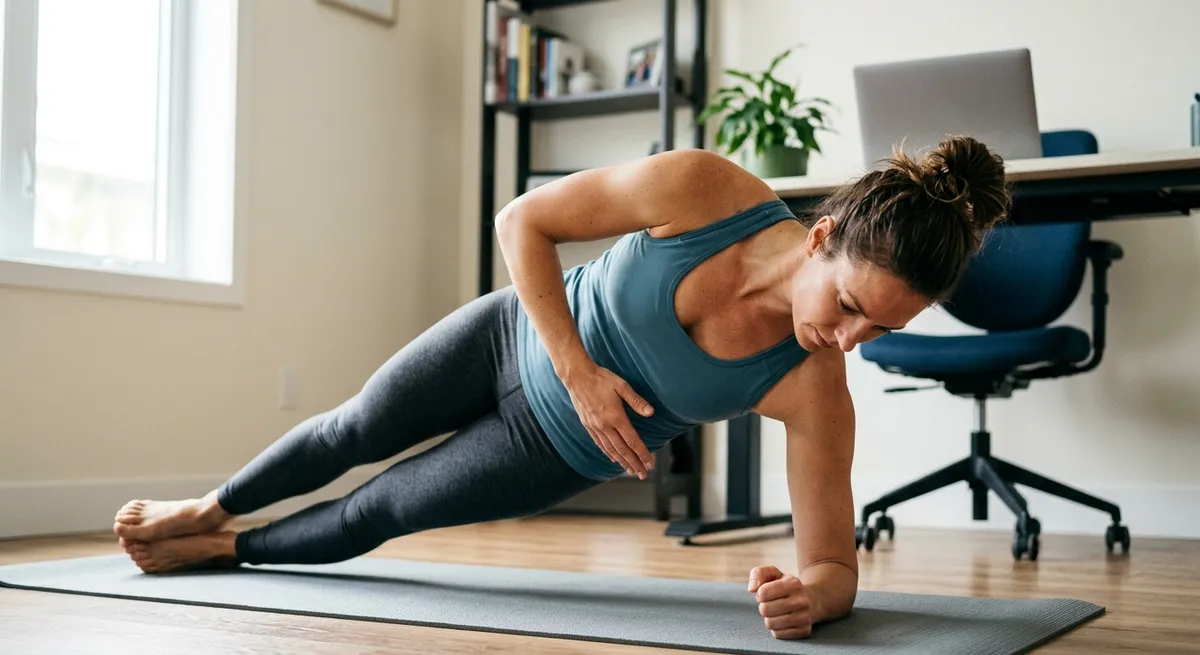
2. High Plank: All About Stability
How to Do It:
- Start Position: Begin on your hands and knees. Step your feet back until your body forms a straight line from your head to heels.
- Engage: Press through your hands and squeeze your glutes to keep your core tight.
- Hold: Try maintaining this position for 20-30 seconds, focusing on your breath and keeping your body aligned.
Common Mistakes:
- Sagging hips: Keep your body straight, avoiding any dip in the hips, which can lead to back strain.
- Tensing shoulders: Relax your shoulders away from your ears; they should not be hunched up towards your neck.
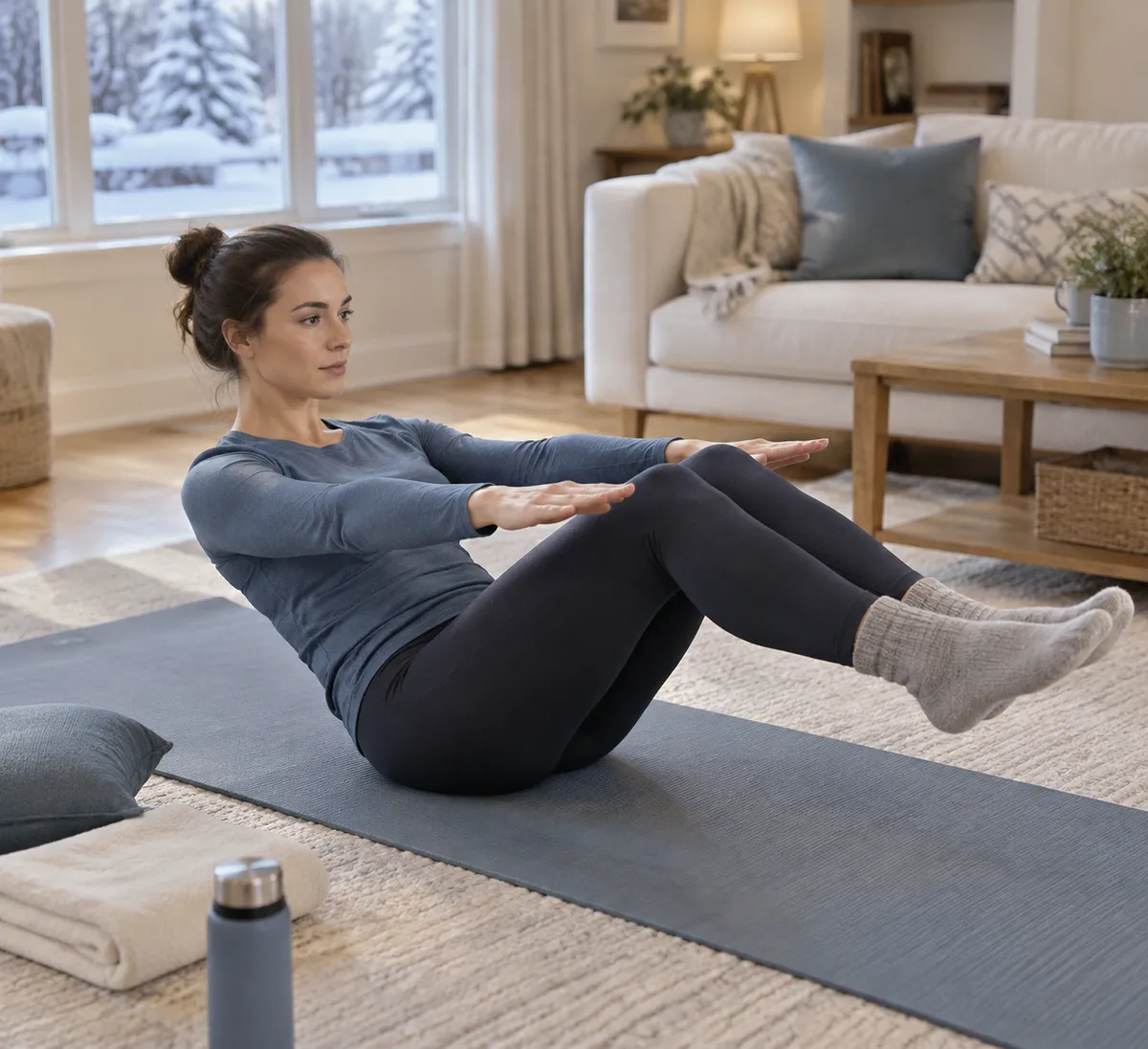
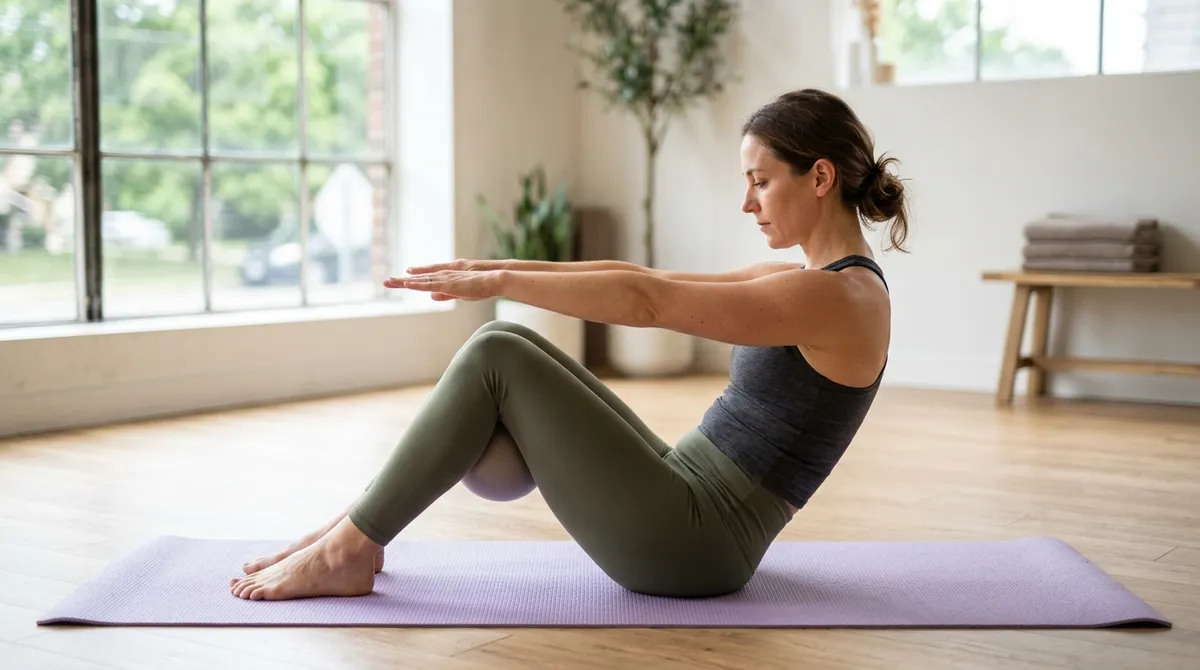
3. Seated Roll Down: Finding Your Balance
How to Do It:
- Start Position: Sit on the floor with your knees bent and feet flat. Hold onto your thighs for support.
- Engagement: Inhale deeply, then as you exhale, slowly roll your spine down one vertebra at a time until you’re lying flat on the mat, using your core to control the movement.
- Roll Back Up: Inhale to prepare, then exhale and roll back up to your seated position, focusing on engaging your deep core.
Common Mistakes:
- Rushing the movement: This exercise is about control, so take your time rolling down and up.
- Holding onto your thighs too tightly: Lighten your grip to ensure your core is doing the work.
Progression Ideas
These exercises can be modified as you become more confident in your movements. Consider incorporating these progressions:
- For the Pelvic Tilt, add small crunches at the top of the tilt.
- For the High Plank, try lifting one leg at a time to intensify the challenge.
- For the Seated Roll Down, experiment with different arm positions to engage your upper body deeper.
Final Thoughts
Core strength is about much more than just achieving a six-pack; it’s about building a solid foundation for all your physical activities. These three Pilates movements will not only help you activate your deep core but also improve your posture and reduce your risk of injury. So, the next time you hit your workout mat, remember: it's time to focus on what really counts for your core strength.
Get started with these exercises today and feel the difference in your stability and overall fitness!